
─── SPECIALIST MICRO-ENTITY ACCOUNTANTS IN LONDON
First Year Accounts for Limited Company in Yarm: Accurate Preparation and Filing Support
- Simple Fixed Pricing
- Fast Turnaround
- Companies House Filing Support
- FRS 105 specialists
First Year Accounts Preparation
- Micro-Entity Accounts Preparation
- Companies House Filing
- Corporation Tax Return
- Qualified Accountant Support
- FRS 105 Accounts
- Experienced Accountants
Find Your Company
Search for your company to continue with the accounting services
Start typing to search for companies...
Results
Years filing UK company accounts
Micro entity accounts submitted
Verified Google reviews
Typical Filing Turnaround
Trusted by Micro-Entity Businesses Across the UK
From newly incorporated companies to established owner-managed businesses, our clients trust us to prepare their accounts accurately and handle their annual filing requirements.
EXCELLENT Based on 300 reviews
 Posted on Google
 Jamie FletcherIt was a pleasure working with Anum on our accounts. The whole process was swift and effortless, and it was one less thing to worry about. I'd highly recommend them.Posted on Google
 Mansur Liman
Trustindex verifies that the original source of the review is Google.
Accotax have been our accountants for many years now. We maintained them, because of their professionalism. In the last coiple of years, i have working with Imran, who has been very professional and helpful in guiding us through the whole process explaining and clarifying every aspect of it. Very prompt in responding to questions and patient with us even when we seem to be slow. I really enjoy working with him. Thank youPosted on Google Muna MohamoudI highly recommend Imran to anyone looking for a reliable and knowledgeable accountant. He helped me sort out a very complicated backlog of accounts and prepared my overdue tax returns with professionalism and attention to detail. Throughout the process, he was incredibly patient, took the time to answer all of my questions, and explained everything clearly. He guided me through each step and helped rectify issues that had built up over time, making what felt like an overwhelming situation much more manageable. I'm very pleased with the service I've received and truly appreciate his support. If you need help with your accounts or taxes, I would highly recommend Imran.Posted on Google
 Sergey MI had a positive experience with Accotax. The work was completed promptly, my tax return was successfully filed, and I received a refund of overpaid tax. I found the cooperation efficient and helpful. Special thanks to Muhammad Saifullah for his assistance.Posted on Google
 Ebba QureshiFabulous team at ACCOTAX - very efficient and good response time . Honest and professional with their work. I would highly recommend them even if you’re a young start up - or a large business they have it covered .Posted on Google
 Mael LeboucherWe worked with a few different accountants before finally settling with Accotax, and we’re really glad we did. Their team is great. Abdul is responsive and easy to reach whenever I have a question, which makes a big difference. They take the time to understand how our business works and what our needs are. They are very knowledgeable, and when they don’t have the answer straight away, they take the time to look into it and get back to us quickly. Anum, who looks after our account on a day-to-day basis, including reconciling invoices and preparing the annual accounts, is amazing. She is professional, efficient, and follows the processes we have put in place together. She's also very quickin getting back to us whenever needed. We’re very happy to work with her and hope to continue doing so for as long as possible. Overall, Accotax has made our accounting experience much smoother and easier. We see them as a long-term partner as our business continues to grow. I would 100% recommend them.Posted on Google
 3rd HubImran provides a very dependable and straightforward accounting service. He is always responsive and professional when managing our accounts. Excellent support.Posted on Google
 Martin TyrrellI have really impressed to date with all dealings with Accotax highly enough. From day one, they've made what can often be a complicated and stressful part of running a business feel straightforward and hassle-free. A special mention has to go to Anum, who has been friendly, incredibly responsive, and genuinely cares about providing the best possible service. No question is ever too much trouble, and she consistently goes above and beyond to make sure everything is dealt with efficiently. I wouldn't hesitate to recommend you to anyone looking for an accountant they can genuinely trust.Posted on Google
 Matthew LyonGreat speedy service and very personable. Anum dealt with my income certificate and did everything quickly and helped me out massively. Very happy with the service provided.
Incorporation
Your first filing timeline depends on your company's incorporation date and accounting reference date.
Accounting reference date
Set by default to the last day of the month of incorporation, one year on.
First accounts due
Normally 21 months after incorporation at Companies House.
First CT600 due
12 months after the end of the accounting period, with tax due earlier.
What Are First Year Accounts for a Micro Company, and When Does That Framework Apply?
Does Your New Company Qualify as a Micro Entity?
Business Turnover
Annual Turnover of £1 Million or less. (£632,000 previously)
Balance Sheet
Balance sheet total of £500,000 or less.(£316,000 previously)
Company Size
On an average 10 or less employees (10 or less previously)
─── OUR FIRST YEAR SERVICES
What's Included in Our First Year Accounts Service?
Our first-year accounts package can include statutory accounts preparation, Companies House filing and Corporation Tax Return preparation where included in the selected package.
First Year Accounts Preparation
Preparation of your first set of statutory accounts under the micro-entity reporting framework, from incorporation to your first year end.
First Accounting Period Review
Review of extended first accounting periods and any separate Corporation Tax return periods where applicable.
Companies House Filing
We prepare and submit your first statutory accounts to Companies House within the filing window.
First Corporation Tax Return (CT600)
Preparation of your first Company Tax Return and supporting computations for HMRC.
Opening Balances & Set-Up Costs
We record pre-trading expenses, director loans and share capital correctly in your opening balance sheet.
─── WHY CHOOSE US
Why Choose Us
Micro Entity Accountants keep micro-entity accounts straightforward, transparent and easy to manage for busy company directors.
FRS 105 Specialists
The micro-entities regime is all we do, so your accounts are prepared to the right standard first time.
Paperless Onboarding
Get set up in minutes with a fully digital, secure process — no printing, posting or office visits.
Deadline Management
We track your Companies House and HMRC deadlines and prompt you early so late filing penalties are avoided.
Fixed Fee, No Surprises
One transparent fixed fee covers preparation, the tax return and both filings. No hourly billing.
Confirmation of your accounting reference date
Split Corporation Tax Returns where the period exceeds 12 months
Pre-trading and formation costs reviewed
Share capital and director loan account set up
Companies House and HMRC submission receipts
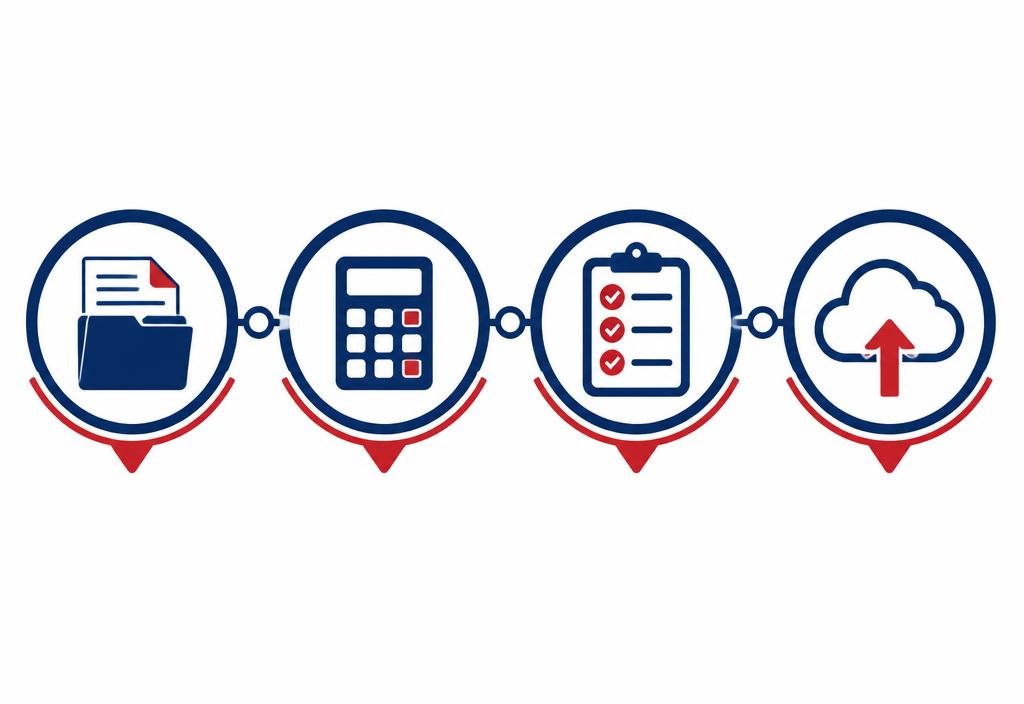
─── How It Works
How Our First Year Accounts Filing Service Works
Share Your Company Details
Send us your incorporation date, accounting reference date, bank statements and any pre-trading costs through our secure portal.
First Accounts & Tax Return Prep
We build your opening balances, prepare your micro-entity accounts and your first CT600 Corporation Tax Return.
Review & Approval of Drafts
You receive draft accounts with plain-English explanations of what has been included and why, ready for director approval.
Submit to HMRC & Companies House
We file your first accounts with Companies House and your CT600 with HMRC, then confirm both submissions.
─── Why Choose Us
Why Choose Us for Your First Year Accounts?
We keep a first filing simple, transparent and easy to manage for directors doing it for the first time.
Paperless Onboarding
Get your new company set up on a fully digital, secure accounting process in minutes.
First-Year Compliance Support
We help you understand the accounting period, records and filing requirements that apply to your company's first accounts.
Fully Qualified Accountants
All work is handled by UK-qualified accountants who specialise in micro companies.
Fixed Fee, No Hidden Costs
One simple fee covering your first accounts preparation and both filings.
─── WHO WE HELP
First Year Accounts Support for Micro Companies Across the UK
Newly Incorporated Companies
Companies formed in the last 12 to 18 months filing their very first set of accounts.
First-Time Directors
Directors who have never filed statutory accounts and want the process explained clearly.
Newly Incorporated Limited Companies
Small companies with limited first-year trading, including those that stayed dormant part of the period.
First Year Accounts for Limited Company in Yarm — Get Them Prepared Properly from the Start
─── FAQs
First Year Accounts FAQs
Still unsure where you stand? Reach out to our UK team at info@microentityaccounts.co.uk and we will review your filing history with you.
They are the first set of statutory accounts a limited company prepares for its initial accounting period. That period normally runs from the incorporation date to the company's first accounting reference date. The accounts set out the company's financial position and performance for that period — typically a balance sheet, and a profit and loss account where the applicable framework and circumstances require one — along with any notes and statements the chosen reporting framework calls for. They are prepared for the company's shareholders and filed with Companies House where required.
The date is not identical for every company. It depends on the company's accounting reference date, its incorporation date and the fact that this is a first set of accounts, which is calculated differently from subsequent years. Because of that, it is worth confirming the specific date that applies to your company rather than relying on a general rule of thumb, and then working back from it so the accounts are not left until the final weeks.
It depends on what the company has actually done during the period. In most cases it means complete accounting records: bank statements and transactions, sales and income records, purchase invoices and expense receipts, details of any assets purchased, share capital information, loans or finance agreements, and any transactions between the company and its directors. Payroll records and VAT records are relevant where the company operates those. Incomplete records can usually be worked through, but the earlier that is raised, the more straightforward the process tends to be.
As a general rule, yes. A limited company is expected to prepare and file statutory accounts for each accounting period, including the first one, even where activity has been limited. Whether the company is treated as dormant for that period, and precisely what needs to be filed, depends on its circumstances and the applicable rules. That is not a decision to make by assumption, and directors of newly incorporated companies in Yarm can check their position before the deadline rather than after it.
No. They serve different purposes and go to different places. Statutory accounts are prepared for the company's members and delivered to Companies House where required. A Corporation Tax Return, such as a CT600, is submitted to HMRC where the company has Corporation Tax obligations, and the figures from the accounts are often used as a starting point when preparing it. Filing one does not complete the other, and the company's first Corporation Tax accounting period may not be identical to the period covered by its statutory accounts.
In most cases the company still has statutory obligations to consider, even where there has been little or no activity. A newly incorporated company with no significant accounting transactions may still need to prepare and file accounts, but the reporting position depends on the circumstances, including whether it meets the conditions to be treated as dormant for the period. Deciding that by assumption can create avoidable problems further down the line, so it is worth taking advice on the correct treatment before anything is filed.
Some do, but not all. Micro-entity reporting is available where a company meets the applicable eligibility requirements for the relevant accounting period, which are assessed against thresholds relating to balance sheet total, turnover and number of employees. A company that qualifies may be able to prepare simpler accounts under FRS 105, the financial reporting standard used by entities applying the micro-entity framework. Eligibility can change as a business grows, so it should be reviewed for each period rather than assumed from the first year onwards.
Failing to file statutory accounts by the applicable deadline can lead to Companies House consequences, which may include penalties. Paying a penalty does not remove the requirement to file the outstanding accounts. The outcome depends on how late the filing is and on the company's filing history. Where accounts are already overdue, the priority is to get accurate accounts prepared and submitted, and then to consider whether an appeal might be possible in the circumstances — eligibility for that depends on the applicable rules.